
There you are, driving on an ordinary Tuesday, and suddenly a song from fifteen years ago starts playing.
Without warning, your chest tightens in the most pleasant way. You’re not sad, exactly — but you’re not fully in the present either.
You’re somewhere between then and now, floating in a feeling you didn’t ask for but don’t want to let go.
That’s nostalgia. And understanding how nostalgia works in the brain is far more fascinating than it looks.
For a long time, nostalgia was actually classified as a medical condition — a type of neurological disease first described in the 17th century to explain the homesickness of Swiss soldiers far from the Alps.
Today, we know it’s not a disorder. It’s a deeply human experience, and neuroscience is finally beginning to understand what it does to us — and why.
What Is Nostalgia, Really?
Before diving into the brain, it’s worth pausing on the definition.
Nostalgia isn’t just remembering the past. It’s a specific kind of memory — one loaded with emotional warmth, tinged with a mild bittersweetness, and almost always centered on meaningful social connections.
A childhood home. An old friendship. A version of yourself that no longer exists.
Psychologists describe it as a “self-relevant, social, and often positive” emotion. You don’t feel nostalgic about your dentist appointment from 2009. You feel nostalgic about the summer you spent with people you loved — even if things weren’t perfect back then.
That distinction matters because it tells us something important: nostalgia isn’t really about the past. It’s about meaning.
How Does Nostalgia Work in the Brain? The Neuroscience Explained
This is where it gets genuinely interesting.
Nostalgia activates several brain regions at once — which is part of why it feels so layered and hard to describe.
The hippocampus, your brain’s memory storage and retrieval hub, is the obvious player here. It retrieves episodic memories — the specific scenes, sounds, and sensations from your past. When you feel nostalgic, the hippocampus is essentially pulling up an old file.
But here’s the part most people don’t expect: the reward system also activates, particularly the ventral striatum and regions associated with dopamine release.
In other words, your brain treats nostalgic memories somewhat like a reward. There’s a mild pleasure signal attached to them.
At the same time, the medial prefrontal cortex — a region tied to your sense of self and personal identity — lights up. This explains why nostalgia feels so deeply personal. It’s not just a memory. It’s a memory about you.
And then there’s the amygdala, which processes emotional significance. It seems to flag certain memories as important, which may explain why nostalgia hits harder for some experiences than others.
All of these regions working together create that unmistakable cocktail: warm, meaningful, slightly aching, and strangely comfortable.
Why Does the Brain Create Nostalgia at All?
This is the question worth sitting with: what is nostalgia actually for?
Research from the last two decades suggests nostalgia serves real psychological functions — it’s not just a glitch or a sentimental indulgence.
It regulates mood. Studies show that people experience nostalgia more frequently when they feel lonely, anxious, or disconnected. It acts as an emotional buffer — the brain reaching into its library of meaningful experiences to remind you: you have been loved, you have belonged, things have been good.
It reinforces identity. Nostalgia connects your present self to your past self. When life feels fragmented or uncertain, nostalgic memories provide a sense of continuity — a through-line that says I am still me. This is why people often feel more nostalgic during major life transitions.
It promotes social connection. Nostalgic memories almost always involve other people. Recalling them tends to increase feelings of social connectedness — even when you’re physically alone. Some researchers describe nostalgia as a kind of “social glue” that keeps us emotionally tethered to the people who matter.
It may even increase optimism. This surprised researchers: nostalgia, despite being backward-looking, tends to make people feel more hopeful about the future. One possible explanation is that it reminds us of our own resilience — we’ve been through meaningful experiences before, and we can face what comes next.
Why Does Nostalgia Feel Bittersweet?
Here’s something curious: nostalgia is rarely pure happiness.
There’s almost always a faint undercurrent of sadness mixed into the warmth. Why?
The bittersweet quality seems to come from the simultaneous activation of both positive (reward) and mildly negative (loss-related) emotional circuits.
You’re happy the memory exists — but aware the moment is gone. You feel connected — but also aware of distance.
Some neuroscientists suggest this is actually what makes nostalgia useful. Pure happiness doesn’t motivate reflection. The slight ache pushes you to value what you had — and perhaps to seek it again in new forms.
In this sense, the bittersweet feeling isn’t a flaw in the system. It might be the point.
What Triggers Nostalgic Feelings?
Familiar scents are among the most powerful triggers. The olfactory system has a direct connection to the hippocampus and amygdala, bypassing some of the brain’s usual filtering. This is why a particular perfume or the smell of rain on pavement can send you somewhere specific in your past almost instantly.
Music is another powerful trigger, likely because it’s processed through multiple brain systems simultaneously — auditory, emotional, and memory-related — and because songs are so often tied to specific life stages.
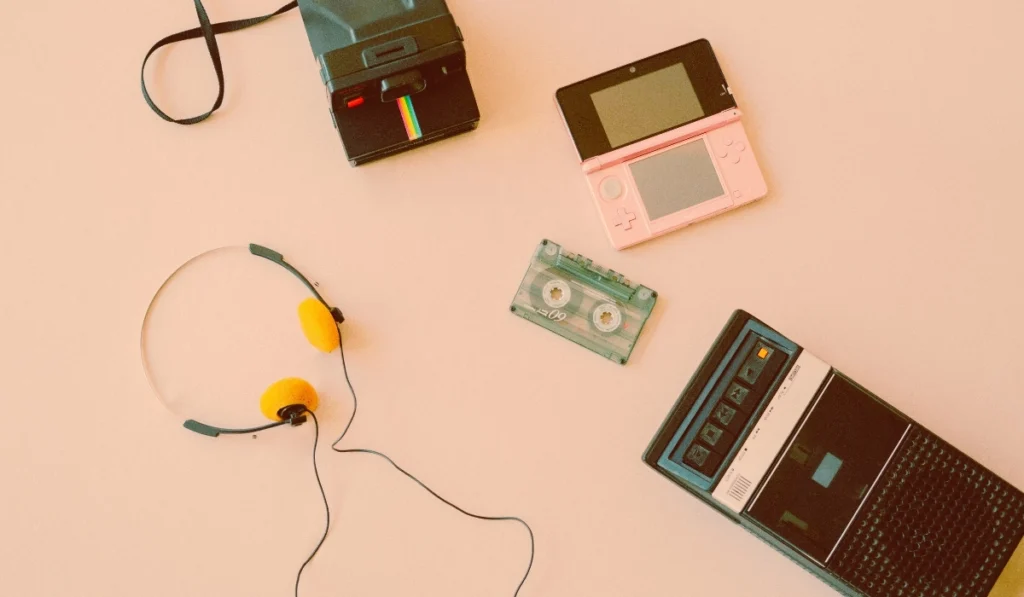
Visual textures, fonts, or color palettes from a particular era can also activate nostalgic responses. This is why vintage aesthetics never seem to go out of style.
Is Nostalgia Always Healthy?
For most people, in reasonable doses — yes.
It’s a normal, functional emotion that actively supports wellbeing.
That said, there’s a less adaptive version: rumination disguised as nostalgia — where someone doesn’t just visit the past, but gets stuck there. Using idealized memories to avoid engaging with the present tends to happen when the past becomes a refuge from current problems, rather than a resource for facing them.
If nostalgia feels more like grief than warmth, or if it consistently interferes with daily functioning, it may be worth exploring with a mental health professional.
The emotion itself isn’t the problem — it’s your relationship with it that matters.
The Bigger Picture
Nostalgia is proof that the brain doesn’t just remember — it feels through memory.
It uses the past as an active tool for identity, connection, and emotional regulation.
The next time that song comes on and you feel that familiar pull, you’re not being overly sentimental. You’re experiencing a sophisticated neurological process that has helped humans maintain meaning and social bonds for as long as we’ve had memories.
Which, come to think of it, is a rather beautiful design.